Thumb Drives, Not Torrents: Inside the Dorm Sneakernet Where Finals Week Files Travel by Hand
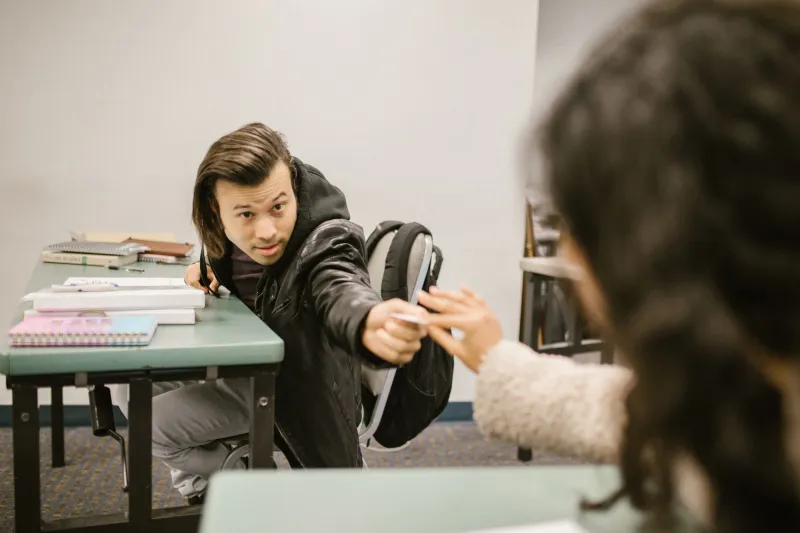
There's a knock on the door of a third-floor dorm room at a large state university in Ohio. Nobody's selling anything. The kid in the hallway is holding a battered 2TB external drive in a rubber case, the kind that's survived three moves and a drop down a stairwell. "It's got the whole statics course archive, the textbook PDFs, and the last four seasons of that show everybody's watching," he says. "Wipe it and pass it on by Sunday."
Welcome to the dorm sneakernet — the internet's oldest protocol, running at walking speed, thriving in 2025.
When the Network Becomes the Bottleneck
Ask any American college student about campus Wi-Fi and you'll get a laugh, a groan, or both. University networks are strange beasts: thousands of devices crammed onto shared infrastructure, content filters, bandwidth shaping, and upload speeds that would've felt slow a decade ago. During finals week, when everyone's streaming lecture recordings and slamming the library's access points at once, the whole thing can grind to a crawl.
So students adapted. Instead of pushing a 40GB folder of CAD software installers through a throttled pipe, they walk it. A drive hand-off takes ninety seconds and moves data at whatever speed your legs can manage — which, as the old joke goes, is a bandwidth figure measured in miles per hour, and it beats most dorm uplinks.
"It's not some shadowy thing," says Marcus, a junior we reached through a group chat he asked us not to name. "It's just, like, logistics. Somebody gets a drive full of good stuff, it makes the rounds of the floor, everybody grabs what they need, and it moves to the next building. We call it 'the circuit.'"
What's Actually on the Drives
The contents vary by campus culture, but the staples are consistent:
- Course material archives. Solution manuals, past exams, textbook PDFs — the stuff that costs $300 new at the campus bookstore.
- Software installers. Full IDEs, CAD suites, statistical packages, pre-configured for machines that can't handle a five-hour download over dorm Wi-Fi.
- Media libraries. Movies, shows, music — plenty of it ripped, some of it purchased and shared the old-fashioned way.
- Games. LAN-party classics never died; they just moved into lounges.
The drive itself is the social object. Drives get nicknames, stickers, reputations. A drive known to be well-organized — clean folder structure, proper file names, no mislabeled junk — gets passed around faster. A messy drive gets benched. It's curation by natural selection, the same dynamic that makes any file-sharing community work: quality in, trust out.
The IT Department's Side of the Story
Here's the part that surprises people: the universities mostly know, and mostly shrug.
We spoke with a network administrator at a mid-sized Midwestern university (he asked for anonymity, since his job involves walking a policy line). "Our network monitoring flags large-scale peer-to-peer traffic, and that's what we act on — not because we're hunting students, but because DMCA notices come to us first," he explained. "A drive moving hand to hand never touches our network. There's no log, no notice, no complaint. From a purely operational standpoint, it's invisible."
Invisible, and honestly, kind of helpful. Every gigabyte transferred by thumb drive is a gigabyte not congesting the campus uplink during peak hours. Some IT staff privately admit the sneakernet takes pressure off infrastructure that hasn't kept pace with enrollment.
That said, the tolerance has limits. Copyright holders still send notices, and universities still forward them. The sneakernet's genius is that it also functions as legal insulation — no IP address in a log means no easy target. "It's not that we can't see it," the admin said. "It's that there's nothing to see."
A Very Old Idea Wearing New Hardware
None of this is new. The word "sneakernet" dates back decades, and tape-trading scenes — Grateful Dead shows, early hip-hop mixtapes, shareware disks passed around computer labs in the '80s — ran on the exact same logic: physical media, trusted hands, personal networks.
What's changed is the economics. A 2TB drive costs about as much as one semester's worth of streaming subscriptions. Storage got so cheap that a single backpack can carry a media library that would've required a pallet of DVDs in 2005. The sneakernet didn't come back because students are nostalgic — it came back because the hardware made it trivially easy and the network made it annoyingly necessary.
There's also a social layer that swarms and seed boxes can't replicate. Trading a drive is a face-to-face transaction. It builds the floor group chat, the study group, the "hey, you looking for anything specific?" conversation in the laundry room. File-sharing over the internet is anonymous by design. File-sharing down the hall is a friendship structure with files attached.
The Rules of the Circuit
Every campus network like this runs on unwritten rules, and they're remarkably consistent across schools:
- Wipe and return on time. The drive belongs to the circuit, not to you.
- Contribute or don't participate. Grabbing without seeding back — even offline — gets you quietly cut from the rotation.
- Keep it off the campus network. The whole point is discretion. Running a public file server from a dorm room invites the exact attention the sneakernet exists to avoid.
- Label everything honestly. Mislabeled files are the fastest way to lose trust.
Sound familiar? It's the private tracker social contract, translated into rubber cases and hallway knocks. Humans build the same governance wherever files change hands.
Will It Survive Graduation?
The sneakernet is seasonal by nature. It swells in fall, peaks around finals, and thins out in summer when everyone scatters. But alumni carry the habit into apartments and workplaces — the same external drive, the same hand-to-hand logic, just a wider circuit. Plenty of the file-sharing culture we cover on this site started exactly this way: not with a protocol, but with a person handing you something and saying, "you've got to see this."
Campus Wi-Fi will get better. Licensing will keep chipping away at free access to course materials. And still, the drives will keep moving, because the sneakernet was never really about bandwidth. It's about owning the transfer — deciding who gets what, when, and on whose terms. On American campuses, that's a lesson students are teaching each other, one hand-off at a time.