Dial-Up Remembered: When Your ISP Actually Wanted You to Share

Photo by Photo by Zh haris on Unsplash on Unsplash
There's a particular sound a generation of Americans can hear with their eyes closed: the screech of a 56k modem negotiating with a phone line, followed by that tiny miracle of a connection chime. It's easy to file that memory away as a joke — the punchline of every "back in my day" meme. But a growing crowd of retired sysadmins and retrocomputing hobbyists will tell you something uncomfortable: those janky, local, weirdly generous networks of the 1990s understood something about community that today's gigabit fiber monopolies have quietly abandoned.
The Local ISP Was a Neighbor, Not a Utility
Before Comcast and its regional siblings consolidated the market, most American towns had at least one scrappy internet provider, often run out of a strip mall office by a handful of overworked engineers. These weren't faceless utilities. If your connection dropped, you could call a guy named Dave who'd walk you through your TCP settings at 10 p.m. because he was the guy.
More importantly, those small ISPs tended to give things away. Unlimited Usenet feeds were a standard perk — full binary newsgroups, text hierarchies, the works — because bandwidth was cheap on their terms and community was the product. Many ran local chat servers, game servers for Quake and Duke Nukem 3D, and file areas where subscribers traded shareware and photos of somebody's dog.
"We wanted people hanging out on our network," says one retired sysadmin from a defunct Ohio dial-up provider, who asked to be identified only by his old handle. "Every hour you spent in our chat server was an hour you didn't spend wondering if the grass was greener down the street. Retention wasn't a contract. It was culture."
Then the Pipes Got Fast and the Rules Got Stingy
Fast-forward to 2025 and the average American household can pull down a movie in under a minute — as long as they don't do it too many times. Data caps in the 1.2TB range, overage fees, and throttling disputes have turned heavy users into suspected criminals in their own homes. The infrastructure is a thousand times better. The social contract is a thousand times worse.
The irony is thick. Modern fiber networks could carry an entire Usenet feed, a family media server, and a seedbox without breaking a sweat. Instead, subscribers get metered like they're filling up a gas can, with the meter owned by the only provider in town.
"Capacity was never the constraint," the sysadmin told me. "Permission was. The old networks were fast enough to share because the people running them wanted you to. The new ones are fast enough to share but the terms of service say don't."
Retrocomputers, Real Lessons
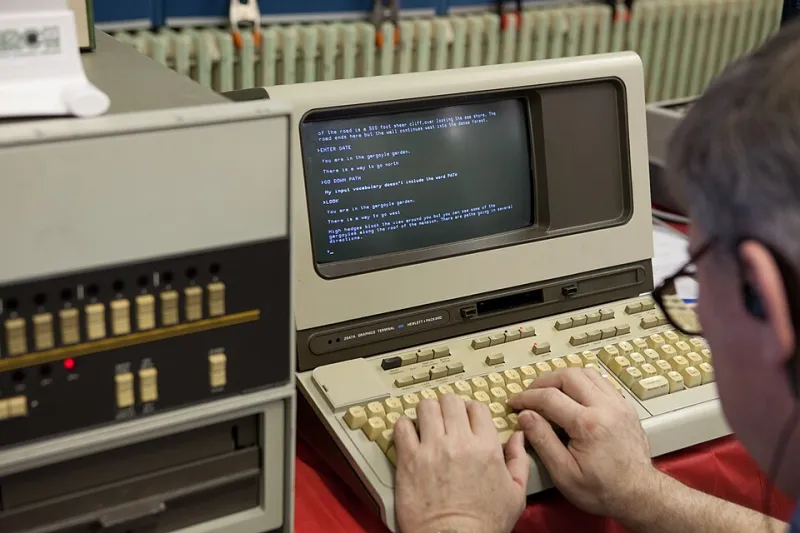
The hobbyist scene has noticed. Retrocomputing groups across the country — from Vintage Computer Federation gatherings in New Jersey to basement BBS revivals in Portland and Austin — are recreating the old model on purpose. A Raspberry Pi running a modern BBS door game or a local file server can serve a household, a dorm floor, or a neighborhood, no monthly cap required.
These projects aren't just nostalgia. They're arguments. Every recreated dial-up board with its file areas and message bases is a demonstration of what a network looks like when the operator and the users want the same thing. The sharing culture that grew out of 1990s networks — the swapping, the seeding, the unpaid moderation, the whole unwritten social contract — didn't emerge despite slow connections. It emerged because the people running the pipes treated users as members rather than metered consumption units.
What We Actually Lost
Nobody's pining for 56k. Latency was brutal, connections dropped when someone picked up the kitchen phone, and downloading a single album took an evening. But the comparison isn't about speed. It's about incentives.
The old ISPs competed on community because they had nothing else to offer. The new ones compete on nothing because they don't have to — many Americans have exactly one realistic broadband option. When there's no competition, there's no reason to be generous, and generosity is where sharing culture comes from.
So the next time your fiber connection blinks out at 1.19TB and you get a cheerful overage notice, think about Dave in the strip mall, running an unlimited Usenet feed on borrowed racks because it made his little network the place to be. The bandwidth got better. The hospitality got worse. And the culture we're still trying to rebuild — the seeding, the sharing, the keeping of things — is really just us trying to get the old spirit back on new pipes.