The Oldest Buffet on the Internet Is Still Open: What Usenet Knows That Your Favorite App Forgot
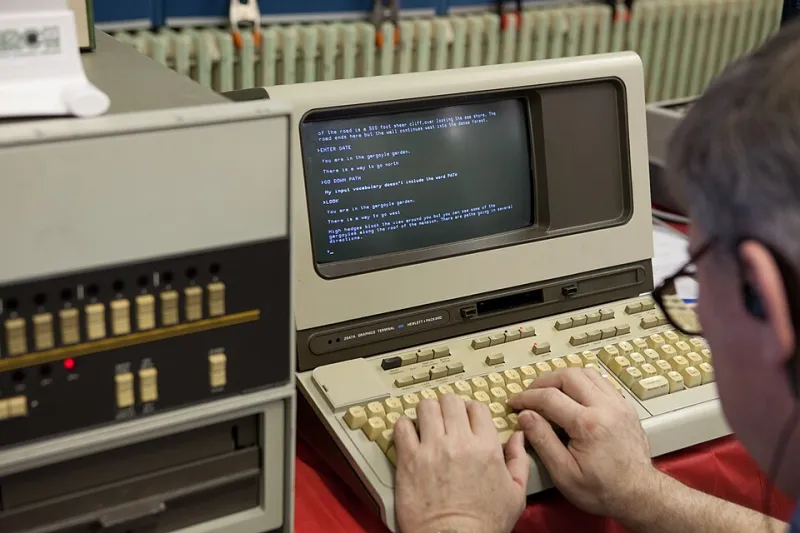
Photo: Autopilot, CC BY-SA 3.0, via Wikimedia Commons
There's a corner of the internet that predates the web, outlived Napster, shrugged off every streaming service launch, and is still quietly doing business in 2026. No, this isn't a ghost story. It's Usenet — and if you've never heard of it, that's kind of the point.
While your social media app of the month pivots, rebrands, or gets acquired into oblivion, Usenet just keeps serving files the way it has since the Reagan administration. It's the slow cooker of the internet: unglamorous, low-maintenance, and somehow always ready when everything else burns out.
A Network Built Before the Hype
Usenet started in 1979 as a way for Duke and UNC students to exchange messages. Think of it as a distributed bulletin board system that grew into a global conversation. Text came first, but by the late '90s and early 2000s, people figured out how to encode binary files into posts — and suddenly the world's oldest discussion network was also one of its most durable file distribution systems.
Unlike torrents, Usenet doesn't rely on other users seeding anything. Files live on provider servers for a set retention period. You download from a server, not from a swarm. There's no ratio to maintain, no seedbox humming in your closet, no dependence on whether some guy in Ohio keeps his computer on overnight.
That architectural difference is exactly why it outlasted flashier options. When LimeWire shut down, its users scattered. When a torrent tracker goes dark, the swarm disperses. Usenet? It just keeps posting.
The Retention Wars
Here's where it gets interesting for anyone who assumes old tech means stagnant tech. Commercial Usenet providers compete fiercely on one metric above almost all others: retention — how long a posted file stays on their servers.
We're talking thousands of days of storage now. Providers race to archive more, longer, faster. It's an arms war fought in petabytes, and American users are the beneficiaries. Subscribe to a quality provider and you can pull files posted over a decade ago, complete with parity files that let you reconstruct damaged data mathematically. No waiting on a seeder in another time zone. No dead torrent with 0 peers.
This is infrastructure thinking that most modern platforms abandoned. Retention is a promise: what gets posted stays findable. Compare that to a streaming service that deletes licensed content overnight, or a cloud folder that vanishes when a subscription lapses.
Why the Cult Following Persists
Ask a Usenet veteran why they never left and you'll hear variations on the same themes:
- Speed. Server downloads saturate your bandwidth. No swarm congestion.
- Privacy of structure. No peer list, no swarm monitoring, no visible participation.
- Longevity. The same newsgroups, the same clients, the same workflow for decades.
- Simplicity of access. Pay a provider, get an indexer, download. No invite trees or ratio economies.
That last point matters more than it sounds. Private trackers — beloved as they are — run on social capital: seed ratios, invite trees, reputation. Usenet runs on a credit card. For plenty of American users juggling jobs, kids, and a mortgage, that's not laziness. That's a rational preference for infrastructure that doesn't demand unpaid emotional labor.
What Modern File-Sharing Should Steal
If you're building a sharing community in 2026 — or just curating your own digital pantry — Usenet offers a few masterclass lessons:
1. Decentralize the conversation, centralize the storage. Usenet's servers hold the goods; the community spreads across countless newsgroups. No single point of failure kills the culture.
2. Redundancy is a feature, not a bug. Parity files mean imperfect archives are still recoverable. Modern backup culture could learn a lot from a protocol that assumed things would break.
3. Longevity beats novelty. Platforms that chase engagement metrics churn through users. Platforms that just... work, quietly, for thirty years, keep them.
4. Low friction sustains communities. Every barrier to entry — invites, ratios, application essays — filters for dedication but shrinks the pool. Usenet's pay-and-go model kept the door open for decades of newcomers.
The Slow Cooker Stays On
Nobody's predicting a Usenet renaissance. It's not trendy, it's not on TikTok, and the interface is aggressively 1990s. But that's precisely the lesson. The flashiest apps of 2015 are mostly footnotes. The protocol from 1979 is still here, still fast, still stocked.
In a digital culture obsessed with the next big thing, there's something deeply American about the quiet persistence of a system that just refuses to quit. Fire up the slow cooker. The internet's oldest buffet is still serving.