Twelve Watts of Glory: A Year of Running a Raspberry Pi Seedbox in My Hallway Closet
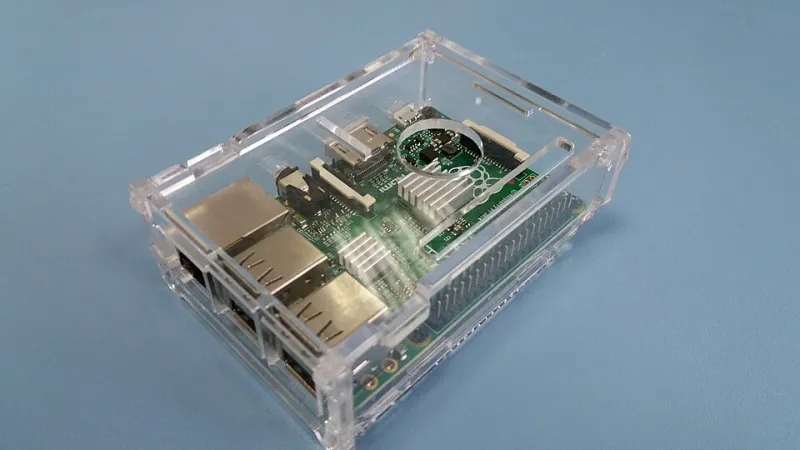
Photo: Антон Пищулин, CC BY-SA 4.0, via Wikimedia Commons
It started, like most of my questionable decisions, with a Reddit thread I opened at 1 a.m. Someone had posted a photo of a Raspberry Pi zip-tied to a closet shelf, running a torrent client 24/7, drawing less power than a nightlight. The comments were full of uptime screenshots — 200 days, 400 days, one legend claiming three years. I looked at my own closet, looked at the Pi Zero 2 W I'd impulse-bought during a shortage panic two years earlier, and figured: why not me?
Twelve months later, that little board is still down there, quietly seeding. Here's everything I learned, so you can skip the mistakes.
The Shopping List (and What It Actually Cost)
The beauty of this build is that nothing in it is exotic:
- Raspberry Pi 4 (2GB) — $45. A Pi 5 works too, but it's overkill and runs hotter.
- Official USB-C power supply — $12. Don't cheap out here; undervoltage is the #1 cause of mystery crashes.
- 128GB SSD in a USB enclosure — $28. Skip the SD card. They die under constant write cycles, and replacing one means restoring your whole setup.
- Case with a fan, or just a heatsink — $8. My closet gets warm in July; the heatsink alone held up fine.
- Ethernet cable — free, from the drawer every household has.
Total: about $93 before tax. Under $100, as promised.
The Software Part Is Genuinely Easy
I flashed Raspberry Pi OS Lite (no desktop, no bloat), installed Deluge with the thin client setup, and had it running in under an hour. Deluge is the community favorite for this because the daemon runs headless while you control it from a nice interface on your laptop or phone. Transmission is a fine alternative if you want even less overhead.
A few settings that matter more than people admit:
- Cap your upload slots. An unconstrained client on a tiny board will thrash itself to death.
- Enable port forwarding on your router if you can. Reachable peers seed dramatically more efficiently.
- Set a schedule or at least a speed cap if your household streams in the evenings. A closet seedbox saturating upstream at 8 p.m. is a fast way to start a domestic incident.
The Power Bill, Measured
I bought a $15 Kill A Watt meter specifically for this, because I'm the kind of person who needs numbers. Results:
- Idle: 2.8 watts
- Active seeding, several peers: 4.5–6 watts
- Peak during a big download: 7.2 watts
Averaging around 5 watts around the clock works out to roughly 44 kilowatt-hours a year. At the national average of about 17 cents per kWh, that's approximately $7.50 a year. My router's power brick probably costs more to run. This is the entire pitch for the Pi seedbox: it's a node that never sleeps and costs less per year than a single month of one streaming service.
The ISP Conversation Nobody Wants to Have
Let's be adults about this. Running a seedbox means your ISP sees torrent traffic, and in the US, that means being aware of copyright notices. A few ground rules I live by:
- Only seed content that's legal to share — Linux ISOs, public domain films from the Internet Archive, Creative Commons music, your own backups of media you own.
- Some ISPs are notoriously notice-happy; others genuinely don't care about legitimate traffic. Know yours.
- A VPN on the Pi is trivial to set up (WireGuard config, done in ten minutes) if you want the traffic insulated. Whether you need one depends on what you're doing and your risk tolerance.
The legal-to-share route is genuinely rewarding, by the way. Seeding Debian images and archive.org rips doesn't sound glamorous until you realize someone in Nairobi is downloading an OS update faster because your hallway closet is helping.
One Year Later: The Verdict
Uptime over the full twelve months: 351 days. The downtime came from a single power outage, one kernel update I botched at 2 a.m. (see: Reddit thread energy), and ten minutes of my own incompetence with a static IP.
Total upload delivered: just over 2.1 terabytes, most of it Linux ISOs and public domain films. Share ratio on my longest-running torrent: 41.7. Somewhere out there, strangers have faster downloads because of a board the size of a deck of cards sitting next to my winter coats.
The surprising part isn't the cost or the uptime. It's the psychology. There's something quietly satisfying about being a contributor instead of just a consumer — a tiny act of infrastructure ownership in an internet that keeps trying to rent us everything. My grandmother kept a deep freezer in the garage her whole life. The Pi in my closet is the same instinct, just running at 12 watts.
If you've got a spare board, a free evening, and a closet shelf, consider this your sign. The swarm is hungry.