Your Driveway Has a License Agreement: Cars, Code, and the Copies You Can't Keep
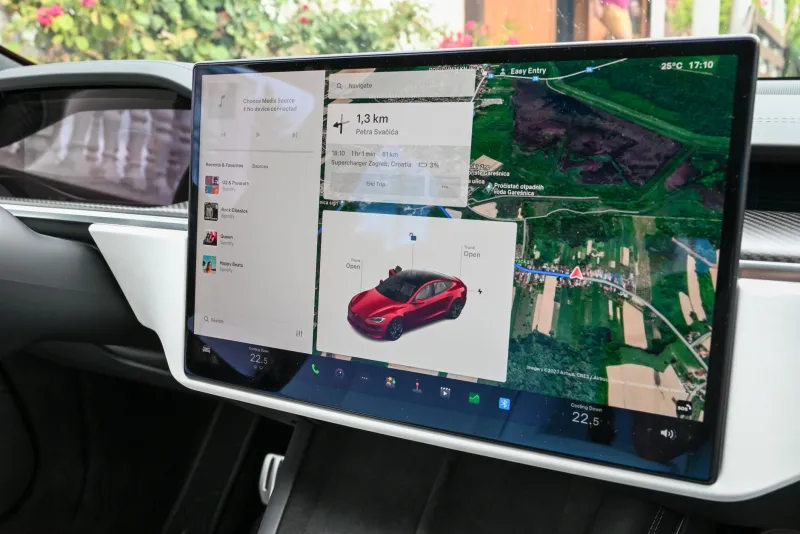
The first time my car told me it had installed an update while I slept, I felt less like an owner and more like a beta tester with a parking spot. The update was 20GB. It changed the infotainment layout, moved a button I used every day, and added a prompt for a connected service I had never asked for. Nothing broke. But something shifted. The thing in my driveway had opinions about its own software, and I was not in the room when it made them.
In 2026, that is not unusual. New cars are rolling software platforms with cellular modems, over-the-air update pipelines, and feature flags that can be flipped remotely. That can be good. Safety recalls can be fixed without a dealership visit. Maps can improve. Battery management can get smarter. But the same pipeline that delivers a fix can deliver a subscription prompt, a removed feature, or a change to the terms you thought you agreed to at purchase.
The Update Is Not a Gift
Over-the-air updates are often framed as a gift from the manufacturer. Sometimes they are. A brake calibration fix or a charging improvement is a genuine service. But an update is also a lever. It lets the manufacturer change the product after the sale, and it lets them do it without a negotiation. You do not get to inspect the changelog in advance. You do not get to decline the non-safety parts. You do not get a rollback button.
That is where the ownership story gets weird. A car used to be a set of parts with a title. Now it is a set of parts with a license. Heated seats can be a subscription. Driver-assistance features can be tiered. Diagnostic data can be gated. The hardware is in the car, but the permission to use it can live somewhere else.
Ownership Used to Mean a Set of Keys
The right-to-repair fight is not new. Massachusetts voters passed a vehicle data law in 2012 and expanded it in 2020. Independent shops have been arguing for years that they need access to the same diagnostic tools and software as dealerships. Automakers have argued that opening the hood too wide creates safety and security risks. Both sides have a point. But the balance has tilted toward the manufacturer.
If you cannot read the code, you cannot fully own the machine. You can own the tires and the paint and the loan. You cannot own the software that decides how the car behaves. That is a strange place to land after a century of car culture built on modification, maintenance, and the idea that a vehicle is yours to understand.
What File-Sharing Culture Already Knows
People who spend time around BitTorrent and file-sharing have been living in this future for years. We know the difference between access and custody. A streaming library is a license. A local file is a copy. A subscription is a promise. A hard drive is a fact.
Cars are becoming streaming services with wheels. The manufacturer keeps the master copy. You get access as long as the terms, the network, and the business model hold up. That is fine until the feature you paid for gets moved behind a new tier, or the app that unlocks your car stops supporting your phone, or the update that fixes a bug also removes a setting you liked.
File-sharing culture's answer is not piracy. It is local control. Keep a copy. Keep an offline map. Keep your music on a drive. Keep the installer. Know where your data lives. If the cloud is the only copy, you do not have a copy. You have a permission slip.
Rollback Is the New Right to Repair
An update without rollback is a one-way door. That is the part of the car software debate that deserves more attention. Safety updates should happen. But owners should also get clear changelogs, the ability to decline non-safety changes, and a way to restore the previous software if the new one breaks something. A car is not a phone. You cannot just buy a new one when the update ruins the interface.
The right-to-repair movement has focused on parts and diagnostics. The next fight is about software versions. If an independent shop cannot roll back a bad update, it cannot fully repair the car. If an owner cannot keep an offline copy of the software that came with the vehicle, they cannot preserve the product they bought. That is not a niche concern. It is the baseline of ownership.
The Copy in Your Garage
I am not arguing that every car should be open source. I am arguing that the terms of ownership should be honest. If the car is licensed, say so at the point of sale. If features can be removed, disclose that. If updates can change the interface, give owners a way to review and reverse them. If the manufacturer keeps the only copy of the software, admit that the car is a service with a steering wheel.
In the meantime, do the small things. Keep offline maps. Keep your music local. Ask for the software version history when you buy a used car. Support right-to-repair laws that include software access. Back up what you can. The file-sharing crowd has been saying this for years: the copy you control is the copy that survives. A driveway is a terrible place to learn that lesson the hard way.