Cook Up Your Own Home Server: 7 Tools Worth the Prep Work in 2025
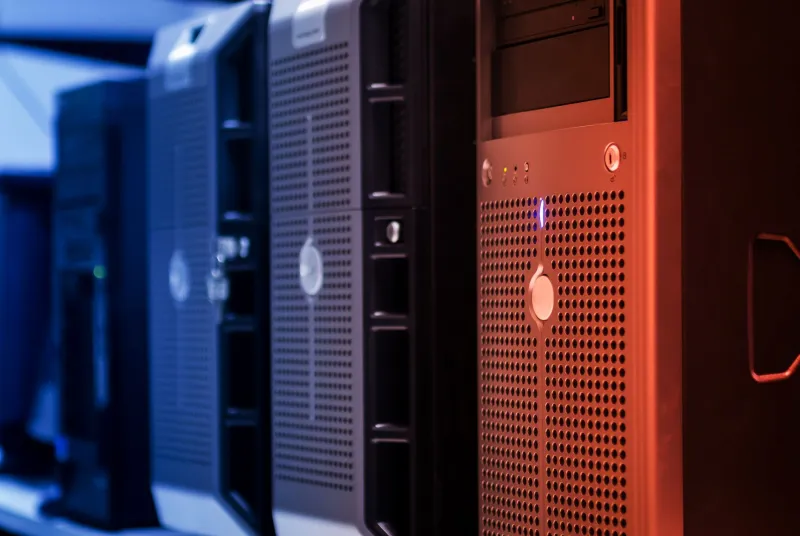
Every self-hoster starts the same way: one spare hard drive, one questionable decision, and suddenly you're researching mini PCs at 2 a.m. If you're ready to take the plunge, think of this as your mise en place — the prep work that makes everything downstream easier. These are the seven tools we'd stock in any home server kitchen, from first-time cooks to seasoned chefs.
1. Plex: The Front of House
Plex remains the gold standard for serving your media library with a Netflix-style interface. Point it at your folders, let it scrape artwork and metadata, and suddenly your collection looks like a professional streaming service — except you own it.
Setup tip: Install Plex Media Server on whatever box you've got, then use the free apps on your TV, phone, or Roku. Remote streaming outside your home may require a one-time Plex Pass purchase depending on your setup.
2. Jellyfin: The Open-Source Substitute
If Plex's direction under corporate ownership gives you pause, Jellyfin is the community-built alternative — fully free, no accounts, no upsells. The interface is slightly rougher around the edges, but you trade a little polish for total control. Many households run both and pick a favorite.
3. Sonarr: Your Sous Chef for TV
Manually hunting down episodes is so 2012. Sonarr monitors the shows you follow, grabs new episodes automatically as they release, renames everything properly, and files it where Plex expects it. It's the difference between a messy kitchen and a line cook who never sleeps.
Setup tip: Pair it with a quality index tracker, set your quality profiles once (prefer 1080p over 720p, skip cam rips), and let it run.
4. Radarr: Same Idea, Movies Edition
Radarr does for your film library what Sonarr does for TV. Watchlists sync, upgrades happen automatically when better quality versions appear, and your movie collection stays organized without you lifting a finger. Together, Sonarr and Radarr are the backbone of any serious media server.
5. qBittorrent: The Stove
Every automated pipeline needs a BitTorrent client at the bottom, and qBittorrent is the clean, ad-free choice. It runs on Windows, Mac, Linux, and even Raspberry Pi, and it integrates directly with Sonarr and Radarr so downloads flow hands-free.
A note on the law: BitTorrent itself is completely legal — it powers Linux distributions, game patches, and archive.org downloads. Downloading copyrighted material you don't have rights to is not, and ISPs in the US do forward copyright notices. If you torrent, understand the risks, know your ISP's policies, and consider a VPN from a reputable, no-logs provider. BitSoup doesn't condone piracy; we do believe in informed adults making informed choices.
6. Home Assistant: Beyond the Media Rack
Once your server is humming, you'll realize it's bored 23 hours a day. Home Assistant turns that spare compute into a privacy-first smart home hub — lights, thermostats, cameras, sensors — without shipping your household data to some cloud vendor. It's the tool that converts a media server hobbyist into a full self-hosting convert.
Setup tip: Run it in Docker alongside everything else, or grab a dedicated Raspberry Pi if your main box is already working hard.
7. Docker: The Kitchen Organization System
Not a tool so much as the philosophy holding the whole kitchen together. Docker packages each app into its own container, so an update to one thing never breaks another, and migrating to new hardware means copying a config folder rather than rebuilding from scratch. Once you go Docker, you don't go back.
Hardware: Three Budget Tiers
The Leftover Special (~$0–150): An old desktop or laptop collecting dust in a closet. Add a large USB hard drive and you're in business. Perfect for learning.
The Workhorse (~$300–500): A used mini PC (Dell OptiPlex and Lenovo Tiny machines are community favorites) or a NAS like a Synology unit, paired with a couple of NAS-grade drives in RAID or mirrored configuration.
The Chef's Kitchen ($800+): A purpose-built rack mount or unRAID server with 20+ TB of storage, hardware transcoding via an Intel Quick Sync-capable CPU, and room to grow. This is the endgame, and yes, it's worth it.
Final Plating
Start small. Install Plex or Jellyfin on hardware you already own, get comfortable, then layer in the automation tools one at a time. The beauty of self-hosting is that it scales with your appetite — and unlike a streaming subscription, nobody can take the meal off your table. Happy cooking.