Who Gets the Knock? When Your Building's Wi-Fi Becomes a DMCA Magnet
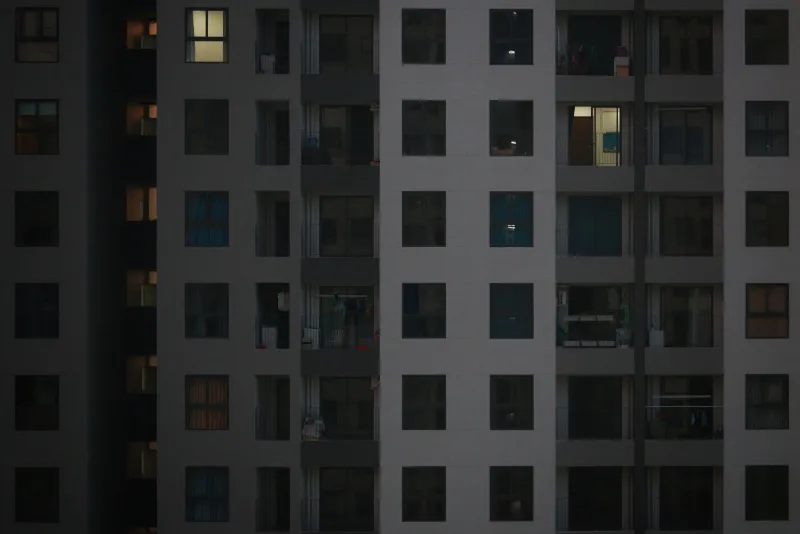
Move into enough apartments across this country and you start noticing a pattern: the lease changes, the gym never has working equipment, but the building's "free Wi-Fi" is always there. Included in rent. Blazing fast in the lobby, sketchy on the fourth floor. It feels like a perk.
It's also a legal gray zone that most renters have never thought twice about — until they do.
The Notice Nobody Reads
Here's the scenario. Someone in unit 3B fires up a torrent client on the building's shared connection. A few hours later, an automated monitoring service — the kind hired by major studios and record labels — logs the IP address and sends a DMCA takedown notice to the internet provider. That ISP, in turn, forwards the notice to whoever owns the account.
In an apartment building, that's not you. That's the landlord, the property management company, or sometimes an HOA.
This is where things get weird. Under the Digital Millennium Copyright Act, the account holder isn't automatically liable for what users do on their network — but they are the ones who receive the notice. And unlike you, they have real incentive to act: repeat notifications can strip an ISP or network operator of its safe harbor protections, the legal shield that keeps them off the hook for users' infringement.
So the landlord's property manager opens an email full of legal jargon, a timestamp, and an IP address. Now what?
Tracing an IP in a Building of Fifty People
Good news for renters: a bare DMCA notice doesn't identify you by name. It identifies an IP address. On a shared network with dozens of tenants, that address could belong to literally anyone — the guy with the home media server, the college kid streaming a boxing match, or nobody at all, since IP logs are often incomplete or rotated.
The trouble starts with the people who can match that timestamp to a lease. Property managers vary wildly in how they respond. Some forward the notice to every tenant with a stern all-caps warning. Some quietly reprimand whoever was using the most bandwidth that night. And a handful — especially in buildings where the ISP contract makes the landlord responsible — have been known to hand over tenant information when pressed with a subpoena.
That last path is rare. Subpoenas cost money, and copyright holders generally focus on ISPs with direct subscriber relationships, not apartment complexes. But "rare" is doing a lot of work in that sentence, and if you're the tenant who got named, the odds stopped mattering.
The Terms of Service Trap
Most building Wi-Fi agreements — the ones you clicked "accept" on without reading — contain language that shifts responsibility squarely onto the tenant. You agreed not to infringe copyrights. You agreed the network operator isn't liable for your activity. Some even promise to cooperate with third-party investigations.
In other words: the perk comes with fine print, and the fine print is written by lawyers who've seen the notices.
There's also a practical wrinkle. On many managed networks, each unit gets an isolated VLAN or a unique login — meaning the building can absolutely tell which apartment the traffic came from, even if the copyright holders can't. Your privacy from the outside world doesn't extend to the property office.
Staying Off the Radar
Nobody at BitSoup is going to tell you how to live your life. But if you're a renter who values a quiet relationship with your landlord, a few basics go a long way:
- Get your own connection when you can. A personal ISP account puts you — not your landlord — in the position of receiving notices, which sounds bad but actually gives you control over the response. Many major US ISPs now offer basic account alerts instead of immediate escalation.
- Understand that a VPN shifts, not erases, exposure. It moves the visible IP to the provider, which changes who sees what — but the building network still knows you're tunneling, and some property networks explicitly block VPN traffic.
- Keep streaming and sharing on separate tracks. Legit services on the communal network, heavier activity on hardware you control, with your own account behind it.
- Read the building's acceptable use policy. It's boring. It's also the document that determines what happens after a notice arrives.
The Bigger Picture
There's something a little absurd about the whole arrangement. Copyright enforcement in 2025 still runs on a system built for a world where one IP address meant one person — and increasingly, it means one building, one coffee shop, one dorm. The notices keep arriving at the wrong doors, and the people answering them are property managers with no legal training and no patience.
Shared Wi-Fi is infrastructure, and like all shared infrastructure, it runs on a social contract. The swarm survives because people contribute; the building network survives because nobody causes problems. Keep your head down, know the rules of your lease, and remember: the free internet is never actually free. Somebody's name is on the bill.